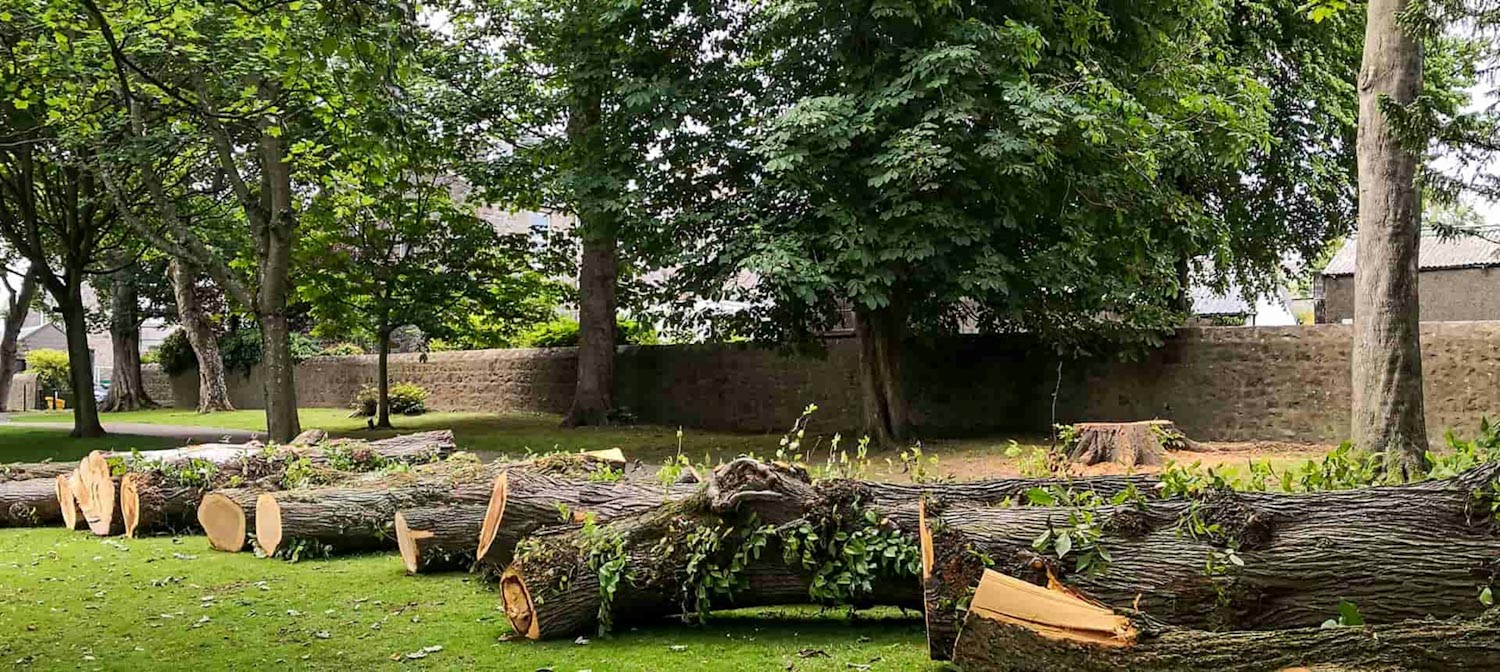
Storm Damage Tree Cleanup: A Complete Guide for Spartanburg Homeowners
Spartanburg County averages around 50 thunderstorm days per year, and the upstate South Carolina region is well within the corridor for significant wind events, ice storms, and the occasional derecho or tornado-adjacent storm system. If you own property with mature trees — and most Spartanburg homeowners do — sooner or later, a storm is going to do something dramatic to one of them.
Knowing what to do in those first hours, days, and weeks after a storm can significantly affect your safety, your insurance outcome, and the cost and quality of the cleanup. This guide walks through the entire process from immediate response through final cleanup and tree assessment — so you're prepared before it happens, not scrambling to figure it out after.
If a tree has fallen on your home or is actively blocking safe access: Call A&R Top Branch Solutions immediately at ((864) 398-7317. We provide 24/7 emergency response throughout Spartanburg County. Don't attempt to go near a tree that may be on power lines.
Phase 1: Immediate Safety — The First 30 Minutes
The moments right after a major storm can be disorienting, and the instinct to go outside and assess damage immediately needs to be tempered by the real hazards that accompany downed trees. Before you set foot outside:
Check for Power Line Contact First
Look out windows before opening any doors. If a tree or branch is touching a power line anywhere on or near your property, stay inside and call Duke Energy's outage line before calling anyone else. A downed line with a tree on it can energize the ground, water standing on pavement, and even the tree itself — creating electrocution hazards that extend far from the obvious wire. Do not approach any downed or potentially downed line for any reason.
If a Tree Has Hit Your House — Stay Out of the Affected Area
A tree on the roof creates structural uncertainty. The roof may be supporting the weight of the tree and could fail if the tree shifts. Avoid rooms directly below or adjacent to impact zones until a professional has assessed the structural situation. Turn off electricity to the affected area at the breaker if you can do so safely from a non-affected part of the house.
Watch for Secondary Hazards
After the initial storm, look for partially broken branches hanging in the canopy — these "widow makers" can fall long after the storm passes, sometimes hours or days later as additional stress is put on a partially broken connection. Keep children and pets away from any area with storm-damaged trees until a professional assessment has cleared them.
Photograph Everything Before Any Cleanup Begins
This is critical for insurance purposes. Take extensive photos and video of the fallen or damaged tree, the path of the fall, any property damage, and the condition of the surrounding trees. Get photos from multiple angles. Don't move anything before you have thorough documentation — your insurance adjuster needs to see the scene as it was, not after cleanup has begun.
Phase 2: Calling for Help — What to Expect from Emergency Tree Service
Once you've assessed the immediate safety situation and documented the damage, it's time to call for professional help. Here's what you should know about the emergency tree service call:
What Information to Have Ready
- Your address and any access notes (gate codes, narrow driveway, etc.)
- A description of the situation — tree on house, tree blocking driveway, tree on fence, hanging limbs, etc.
- Whether any power lines are involved
- Whether the situation is actively dangerous or whether it can wait for a standard morning crew
Emergency vs. Standard Service
Not every storm damage situation is a true 24/7 emergency. If the tree has fallen in your yard away from structures and isn't blocking access or creating immediate hazard, that job can be scheduled for the next available standard crew day, which will cost significantly less than after-hours emergency response. Be honest with yourself about whether the situation is urgent — and be honest with the crew when you call so you get the right response rather than emergency rates for a non-emergency situation.
True emergencies — tree on the house, tree blocking the only exit, hanging limbs over areas that can't be kept clear, utility line contact — warrant immediate response regardless of the hour. A&R Top Branch Solutions answers 24/7 for exactly these situations.
What "Mitigation Work" Means
When a tree is actively damaging a structure, the immediate work is typically mitigation — stopping the damage from getting worse. This may mean removing the portion of the tree that is actively pressing on the roof, tarping the damaged area, and securing the situation. Complete cleanup often follows as a separate phase. Understanding this distinction helps you set accurate expectations for what the initial emergency visit accomplishes.
Phase 3: Dealing With Your Insurance Company
Homeowner's insurance and storm tree damage have a relationship that confuses many Spartanburg homeowners. Here's the essential framework:
When Your Insurance Typically Covers It
- Damage to your home, garage, fence, or other insured structure caused by a falling tree — generally covered under the dwelling portion of your homeowner's policy, subject to your deductible
- The cost of removing the fallen tree from the structure it damaged — generally covered as part of the property damage claim
- Debris removal from the yard up to a specified limit (often $500–$1,000 in standard policies) — check your specific policy
What Insurance Typically Does Not Cover
- The tree itself — trees are generally not insured property under standard homeowner's policies
- Tree removal when the tree fell in the yard and did not damage an insured structure — a large tree that fell away from everything with no structure damage is generally a cost you bear yourself
- Tree removal for a tree that is dead or diseased but has not yet fallen — preventive removal is considered property maintenance, not storm damage
- Damage from a neighbor's tree to your property — your own policy covers your property damage; the neighbor's liability insurance comes into play only if negligence can be demonstrated
The Insurance Documentation Process
Step 1: Contact Your Insurance Company Promptly
Call your insurance company or file online as soon as the immediate emergency is addressed — typically within 24–48 hours of the event. Prompt reporting protects your claim.
Step 2: Get a Professional Written Estimate Before Authorizing Full Cleanup
Your insurance company will want to review a written estimate before authorizing payment. Get written estimates from licensed, insured contractors — not verbal quotes. A&R Top Branch Solutions provides written estimates specifically formatted for insurance submissions.
Step 3: Document Everything in Writing
Keep records of all calls, claim numbers, adjuster names, and every piece of written communication with your insurance company. If an adjuster disputes the scope or cost of work, your documentation is your protection.
Step 4: Don't Sign Away Rights Prematurely
Be cautious about signing any "assignment of benefits" agreements with contractors that transfer your insurance rights to them before you fully understand the scope of the claim. Work with contractors who provide transparent written estimates and let you manage the insurance relationship directly.
Phase 4: Cleanup — What the Process Looks Like
Once the emergency mitigation is done and the insurance process is underway, the full cleanup begins. Here's what a professional storm cleanup job involves from start to finish:
Hazard Branch Removal First
Before any cutting at ground level, the crew scans the entire tree canopy for hanging broken branches. Any widow makers are rigged and removed first — this is the most dangerous part of storm cleanup work, and it requires experienced crews who know how to work in a canopy that may have unpredictably failed components. Never let a crew skip this step.
Systematic Sectioning from the Top Down
The fallen or damaged tree is worked systematically — typically from the top of the fallen crown toward the trunk, reducing material to manageable sections. Each section is cut, cleared, and either chipped on-site or moved to the staging area. For trees on structures, this process involves careful rigging to control every cut's outcome rather than allowing pieces to drop freely.
Stump and Root Ball Handling
Trees that have uprooted present a specific challenge — the root ball is often still partially attached and holding tension on the fallen trunk. Cutting a tensioned trunk without understanding where the stress is releases that energy in unpredictable ways. This is technical work that requires an experienced crew to assess before the first cut is made.
Cleanup and Restoration
Professional storm cleanup ends with the property in clean, safe condition — all debris chipped or removed, any remaining stump ground if requested, and the site left cleaner than the crew found it. Large wood sections can be set aside as firewood if you prefer; otherwise they go with the rest of the material.
Phase 5: Assessing the Surviving Trees
This is a step that many Spartanburg homeowners overlook in the aftermath of a storm: the trees that didn't fall may still have sustained significant damage. A major storm event that damages one tree on your property often delivers stress to surrounding trees as well — from root zone saturation, from impact by falling debris, and from the root system disruption that accompanies uprooting when roots of adjacent trees are intertwined.
After any significant storm event, we recommend a full property walk with a professional to assess the condition of all significant trees, not just the ones that fell. Partially broken branches that are still attached, new leans that appeared, root disturbance, and canopy damage that wasn't visible from ground level are all things that a post-storm assessment can identify — catching the next potential failure before it happens rather than after.
A&R Top Branch Solutions provides free post-storm assessments throughout Spartanburg County as part of our normal service. Call ((864) 398-7317 to schedule your assessment after any significant storm event.
Preventing the Next Event: Pre-Storm Tree Maintenance
The best storm preparation is proactive tree maintenance. Trees that are regularly trimmed, with dead wood removed and structural defects identified and managed, are significantly less likely to fail in storms. Specifically:
- Annual or biennial professional trimming keeps dead wood out of the canopy and allows early identification of structural issues before they become emergencies
- Crown thinning reduces the "sail area" that catches wind, meaningfully reducing the mechanical force on the tree during high-wind events
- Hazard tree removal before storm season is dramatically less expensive than emergency cleanup after the tree falls — typically 40–60% less when you factor in the emergency premium, potential property damage, and insurance deductibles
- Supplemental cabling on trees with co-dominant stems or identified structural defects can prevent failures that would otherwise be inevitable in a significant storm
Schedule your pre-storm season tree assessment today. Call ((864) 398-7317 — we serve all of Spartanburg County and provide free written assessments on every property visit.